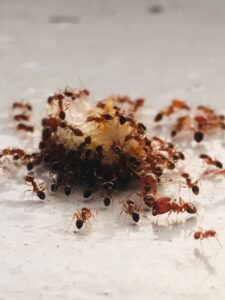
Summer in Central Texas can bring steady pest pressure around homes. Heat, humidity, irrigation, outdoor meals, pet routines, and sudden storms all create opportunities for pests to move, nest, feed, and enter structures. Ants may trail toward kitchens and patios. Mosquitoes may develop around standing water. Flies can gather near trash or outdoor food. Rodents and wildlife may search for shelter near attics, garages, and crawl spaces. Termites, bed bugs, roaches, fire ants, and bee hive concerns can also become harder to ignore when conditions support activity.
A practical pest prevention checklist helps homeowners look at the whole property instead of reacting to one sighting at a time. Professional pest control adds inspection, identification, treatment planning, and follow-up, which matters when pests are hidden, seasonal, or returning from the same source.

Check Water, Moisture, And Drainage
Water is one of the most important summer pest drivers. Even small amounts can support mosquitoes, flies, ants, roaches, rodents, wildlife, and termites when moisture stays near the structure. After rain or irrigation, shaded areas can remain damp long enough for activity to build.
Review moisture-prone areas such as:
- Gutters, downspouts, drains, birdbaths, and plant saucers that hold water
- Hose bibs, irrigation lines, low spots, and damp mulch near foundations
- Crawl-space edges, garages, sheds, and utility rooms with moisture concerns
- Trash areas, pet bowls, outdoor kitchens, and patios where flies may gather
- Wood, cardboard, or debris that stays damp near soil or walls
Standing water and damp materials should be treated as warning signs, not minor details. A professional inspection can determine whether the moisture is only a maintenance concern or already supporting pest activity.
Inspect Entry Points And Shelter Zones
Pests often become indoor problems after finding small access points outdoors. Summer heat can push pests toward cooler, protected spaces, while storms can disturb nesting areas and drive activity closer to the home. Entry-point review is especially important around garages, rooflines, vents, doors, windows, and foundation edges.
Homeowners should watch for:
- Door sweeps, window screens, garage seals, and weather stripping with gaps
- Openings around pipes, cables, vents, roof returns, and utility lines
- Loose soffits, damaged trim, lifted flashing, and crawl-space access points
- Stored boxes, firewood, clutter, or yard materials placed close to the home
- Droppings, rub marks, chewing, webbing, mud tubes, or repeated pest sightings
Some properties need a one-time response, while others benefit from recurring service because pressure returns through the season. This guide on service timing helps explain why the right schedule depends on pest type, property conditions, and repeat activity.
Watch Food Sources And Outdoor Activity
Summer changes how families use the home. More grilling, gatherings, pet feeding, and yard work can create food sources that pests notice quickly. Ants may find crumbs or drink spills. Flies may gather near trash. Fire ants may become active in lawns or open areas. Rodents and wildlife may investigate pet food, birdseed, or unsecured bins.
Key areas to check include:
- Outdoor dining spaces, grills, patios, and picnic areas after use
- Trash cans, recycling bins, compost, and dumpster areas near the home
- Pet food, birdseed, pantry storage, and garage storage containers
- Lawn edges, play areas, walkways, and garden beds with fire ant activity
- Guest rooms, luggage areas, and shared furniture where bed bugs may be introduced
Food-source control is part of prevention, but it does not replace pest identification. If activity continues after cleaning, the source may be hidden in walls, soil, vegetation, drains, or storage areas. Professional evaluation can connect what is visible with what is happening behind the scenes.
Schedule Follow-Up When Problems Keep Returning
A checklist is most useful when it leads to action at the right time. Repeated pest activity often means something important was missed: an entry point, water source, nesting area, treatment gap, or seasonal pressure point. Ants may return from an exterior colony. Mosquitoes may keep developing after containers are refilled. Rodents or wildlife may continue using a roofline opening. Termites may remain hidden even when visible signs are limited.
When treatment does not seem to hold, it is important to review the conditions, timing, and pest type instead of assuming the problem is simple. This overview of treatment follow-up explains why continued activity may require reassessment, patience, or additional service.
Professional pest prevention works best when inspection, treatment, exclusion, cleanup guidance, and monitoring are connected. Central Texas homes can face different pest pressure from one month to the next, so a flexible plan helps keep protection aligned with weather, property use, and the pests actually present.
Keep Summer Pests From Settling In
Summer pest pressure is easier to manage when water, entry points, food sources, shelter, and recurring activity are inspected together. For professional pest prevention, pest control, ant control, bed bug control, bee hive control, fire ant control, fly control, mosquito control, rodent control, termite control, wildlife control, and roach control, contact Cen-Tex Pest Control today.