Ants are one of the most common pests in Central Texas, and their persistence makes them a frequent concern for homeowners. While some species are more of a nuisance than a danger, others can inflict painful stings or cause structural damage. Understanding the types of ants you might encounter and the best ways to manage them is crucial to keeping your property pest-free. A well-informed approach can help you address infestations quickly and reduce the risk of them returning.

Identifying Common Ant Species in Central Texas
Different ant species require different control methods, making proper identification an essential first step. In Central Texas, a variety of ants can be found both indoors and outdoors.
- Fire ants: Known for their aggressive behavior and painful stings, fire ants form large mounds in yards and can pose risks to people and pets.
- Carpenter ants: These ants nest in wood and can cause structural damage over time by hollowing out damp or decaying areas.
- Odorous house ants: Small, dark ants that emit a distinct odor when crushed. They are often found foraging for sweets inside kitchens.
- Acrobat ants: Recognizable by their habit of raising their abdomens over their heads when disturbed. They often nest in decaying wood.
- Pavement ants: Common around sidewalks, driveways, and building foundations, they nest under cracks and crevices.
For a more detailed look at the behavior and appearance of each species, reviewing ants in Central Texas can help in identifying what you’re dealing with.
Signs of an Ant Infestation
Ants often make their presence known through foraging activity, but there are other signs to watch for. Identifying an infestation early can prevent larger problems.
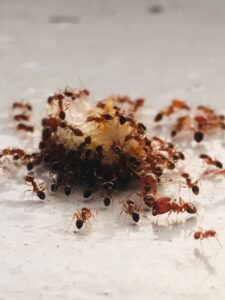
- Visible trails: Lines of ants moving to and from a food source, often along walls or baseboards.
- Soil mounds: Raised dirt areas in the yard can indicate outdoor nesting sites.
- Wood shavings: May signal the activity of carpenter ants inside wooden structures.
- Winged swarmers: The presence of winged ants indoors often points to a mature colony nearby.
- Frequent sightings: Repeated ant appearances in the same areas suggest an established route or nest.
Knowing these indicators can help you take action before an infestation spreads to multiple areas of your property.
Effective Indoor Control Strategies
Addressing ants inside the home requires more than just eliminating the visible workers. The goal is to target the source of the infestation, which is the nest.
- Identify entry points: Seal cracks and gaps around doors, windows, and foundations.
- Remove attractants: Keep counters clean, store food in airtight containers, and promptly wipe up spills.
- Targeted baits: Use bait stations that worker ants carry back to the colony, which can help eliminate the queen and other members.
- Reduce moisture: Fix leaks and address damp areas, which can attract ants and other pests.
- Monitor activity: Regularly check problem areas to gauge the effectiveness of control measures.
Because ants often have large, hidden colonies, interior treatments are most effective when paired with exterior control efforts.
Outdoor Prevention and Control Methods
Keeping ants out of your home starts with reducing their presence around the property. By making your yard less inviting, you can minimize the chances of an infestation indoors.
- Maintain landscaping: Keep plants, shrubs, and tree branches trimmed away from the house to reduce access points.
- Manage soil moisture: Avoid overwatering and ensure proper drainage to deter ants from nesting.
- Control food sources: Clean up pet food bowls, remove fallen fruit, and cover outdoor trash bins.
- Disrupt nesting sites: Regularly inspect and treat soil mounds or other potential nesting areas.
- Barrier treatments: Apply targeted treatments along the foundation and entry points to deter ants.
For properties dealing with aggressive species, such as fire ants, specialized approaches like those outlined insmart ways to keep fire ants out of your yard can be particularly effective.
Why Professional Ant Control Delivers Better Results
While basic prevention and treatment steps can reduce ant activity, complete control is often challenging without expert help. Ant colonies can be extensive, with satellite nests that are difficult to locate. Professionals have the training, tools, and products to target infestations more effectively, ensuring that the queen and other key members are eliminated.
An expert inspection can reveal contributing factors, such as structural vulnerabilities or landscaping issues, that might not be obvious to the untrained eye. They can also implement ongoing monitoring programs to detect early signs of reinfestation, keeping your home protected year-round.
Take Back Your Home from Ants
Ant infestations can escalate quickly if left unchecked, but a combination of proper identification, targeted strategies, and professional oversight can keep your property ant-free. For thorough inspection, effective treatment, and preventive solutions, contact Cen-Tex Pest Control and protect your home from unwanted ant activity.