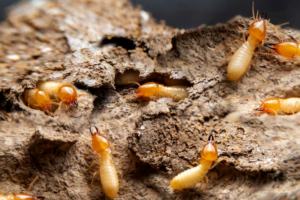
Fall may bring cooler mornings and shorter days to Central Texas, but that does not mean termite activity stops. Subterranean termites live and travel below ground and inside protected structural areas, where soil temperature and moisture can remain favorable even when outdoor conditions become more comfortable. Visible swarm activity may decline, yet feeding and movement can continue out of sight.
Our team approaches termite control by looking at the conditions that support hidden activity year-round. Moist soil, wood-to-soil contact, plumbing leaks, irrigation, foundation cracks, and protected structural pathways can all allow termites to remain active during fall. That is why seasonal cooling should not be treated as proof that an earlier termite concern has resolved on its own.
Fall Weather Can Reduce Visible Activity Without Stopping The Colony
Termite behavior changes with temperature and moisture, but colonies do not simply disappear when summer ends. Central Texas fall weather can still include warmth, rain, irrigation, and soil conditions that support subterranean termite movement. Because workers remain protected underground or inside wood, homeowners may see fewer obvious signs while activity continues.
Our guide to perimeter pest protection explains why exterior conditions around foundations, doors, landscaping, and moisture zones matter when pest pressure shifts. Termites require specialized inspection and treatment beyond general perimeter service, but the same property-wide awareness helps identify where risk may be building.
Fall conditions worth reviewing include:
- Moist soil near foundations after rain or irrigation
- Plumbing leaks around slabs, crawl spaces, or exterior walls
- Wood-to-soil contact around posts, siding, steps, or stored materials
- Landscape beds that hold moisture close to the structure
- Foundation cracks or utility penetrations that create concealed access
- Previous termite areas that have not been professionally rechecked
These conditions can remain important throughout fall, even when termites are not swarming visibly.
Hidden Signs Matter More Than The Season On The Calendar
A termite problem should be evaluated by evidence, not by the month. Mud tubes, discarded wings, weakened wood, bubbling paint, or unexplained surface changes can indicate activity that deserves professional inspection. Some signs may reflect older damage, while others may point to a colony that is still feeding nearby.
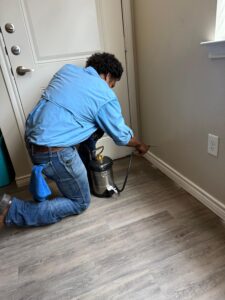
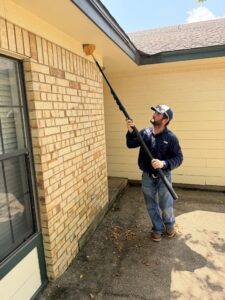
Our technicians compare visible evidence with moisture, foundation conditions, soil contact, and structural access. That broader inspection helps determine whether the problem is current, where termites may be traveling, and what treatment options fit the property.
Important warning signs include:
- Mud tubes along foundations, garage walls, or structural supports
- Hollow-sounding or weakened wood near suspected activity
- Shed wings around windows, doors, vents, or interior lights
- Swarmers appearing indoors or close to the structure
- Bubbling paint or surfaces that change without another clear cause
- Flooring or trim that begins to feel weak or uneven
Because termites can feed inside wood, the visible surface may not show the full extent of damage. Early evaluation gives our team more information before repairs or renovations disturb the evidence.
Early Treatment Helps Limit Damage And Preserve More Options
Waiting until spring to investigate a fall termite concern can allow hidden damage to continue. Our article on early termite action explains how small warning signs can connect to damage behind walls, beneath flooring, around foundations, and inside structural wood. Delayed treatment can increase uncertainty and may expand the amount of material that eventually needs repair.
A professional termite-control plan may include:
- Confirming active termite evidence before structural repairs begin
- Mapping vulnerable foundation, soil-contact, and moisture areas
- Selecting treatment based on the structure and level of activity
- Using soil or wood treatments when inspection findings support them
- Correcting moisture conditions that contribute to termite pressure
- Monitoring previously active areas for fresh evidence
Cen-Tex currently offers active termite treatment, protection for termite-free properties, and pre-construction options involving soil, slab perimeters, and framing. Those services reflect an important principle: termite control works best when treatment matches how termites are reaching the structure.
Fall can actually be a practical time for inspection because homeowners may notice changes around foundations, irrigation, landscaping, or interior wood after summer heat and seasonal storms. A professional assessment can establish a baseline before winter and document whether signs appear active, old, or uncertain.
Moisture deserves particular attention. Subterranean termites rely on protected, humid pathways, and Central Texas properties can continue providing those conditions through irrigation, plumbing issues, landscape materials, or poor drainage. Correcting moisture can reduce favorable conditions, but it does not eliminate an established colony by itself.
The strongest long-term approach combines inspection, species and activity confirmation, targeted treatment, moisture management, and follow-up. A one-time visual check cannot show colony size or hidden travel routes, and repairing damaged wood before treatment can conceal evidence or leave active termites nearby.
Fall therefore should not be considered an off-season for termite awareness. If the property has mud tubes, swarm evidence, weakened wood, or moisture conditions that have supported termites before, professional inspection can clarify whether activity is continuing and what response is appropriate.
Check The Structure Before Hidden Activity Has More Time
If you notice termite warning signs this fall, contact Cen-Tex Pest Control for professional termite control, inspection, treatment planning, prevention, and long-term follow-up.