Pests often become indoor problems because they first build activity around the outside of a home. Foundation edges, door thresholds, utility openings, landscaping, and moisture zones can all create routes that lead insects and rodents closer to living spaces. A well-planned exterior barrier helps reduce that pressure before pests gain access.
Professional pest control uses perimeter treatment as one part of a broader prevention strategy. In Central Texas, common concerns can include ants, large cockroaches, spiders, crickets, silverfish, earwigs, mosquitoes, rodents, termites, bed bugs, and flies. The goal is not simply to spray around the house. It is to identify where pests are approaching, choose the right treatment areas, and keep entry points under regular review.

Perimeter Treatments Focus On High-Risk Entry Zones
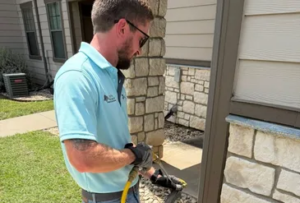
A perimeter treatment is most useful when it is placed where pests are likely to travel. Technicians examine the exterior for cracks, gaps, moisture, vegetation, and other conditions that can funnel activity toward the structure.
Common treatment and inspection areas include:
- Foundation edges where ants and large cockroaches may travel
- Door thresholds, garage seals, and window frames with small openings
- Utility penetrations around pipes, cables, and exterior equipment
- Shaded landscape beds that stay damp after irrigation
- Eaves and exterior surfaces where spiders may build webs
- Transition points between patios, walls, and planted areas
Late-summer conditions can make these areas especially important. Heat, irrigation, storms, and warm evenings may keep pests active even as the season begins to change. A closer look at seasonal pest pressure shows why entry points and exterior shelter should be reviewed before activity shifts indoors.
Professional placement matters because different pests use the perimeter differently. Ants may follow soil edges or utility lines, while large cockroaches often favor damp, shaded areas. Spiders may concentrate near exterior lights where other insects gather.
Exterior Barriers Work Best With Moisture And Shelter Control
Perimeter treatment can reduce pest entry, but it works best when the surrounding environment is also less attractive. Water, food, and shelter can keep pests close enough to test doors, vents, and cracks repeatedly.
Important exterior conditions include:
- Irrigation overspray that keeps soil damp near the foundation
- Gutters or downspouts that discharge water too close to the home
- Mulch, leaf litter, or debris pressed against exterior walls
- Trash, recycling, pet food, or outdoor dining residue near entrances
- Dense vegetation touching siding, windows, or rooflines
- Standing water that supports mosquitoes and other moisture-seeking pests
These conditions can weaken the value of any one-time exterior treatment if they continue to draw pests back. A practical summer prevention checklist reinforces the importance of checking water, food sources, shelter, and entry points together instead of treating them as unrelated problems.
Professional pest control adds another advantage by helping determine which environmental issues are actually connected to active pest pressure. Not every wet area or crack needs the same response, so inspection keeps treatment focused.
Monitoring Helps Keep The Perimeter Effective Over Time
Exterior conditions change. Rain, irrigation, landscaping, construction, and normal wear can create new routes after an earlier treatment. That is why recurring service often includes inspection and reapplication rather than assuming one visit will protect the property indefinitely.
Ongoing perimeter protection may include:
- Rechecking previous hot spots for fresh activity
- Refreshing exterior treatment where exposure has reduced effectiveness
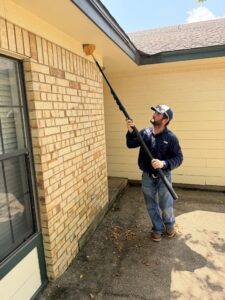
- Removing cobwebs and reviewing eaves for renewed spider activity
- Inspecting door seals, garage edges, and utility penetrations
- Watching for moisture changes around lawns and foundation areas
- Adjusting treatment as seasonal pest pressure shifts
Ongoing service plans may include interior treatment, exterior perimeter treatment, cobweb sweeping, covered re-services, and optional yard coverage for properties with heavier outdoor pressure throughout the year.
Interior treatment may still be needed when pests are already inside. The exterior barrier helps reduce new entry, while targeted indoor service addresses active harborages or travel routes that have already developed.
Different pests also require different expectations. Termites, rodents, mosquitoes, and bed bugs need specialized inspection and treatment plans. A perimeter barrier may help with general household pest pressure, but it should not be treated as a substitute for species-specific service when the problem calls for something more focused.
The strongest long-term results come from connecting exterior treatment with entry-point review, moisture management, sanitation, and follow-up. This approach helps reduce how often pests reach the structure and gives technicians a clearer picture of where pressure is increasing.
Perimeter treatment is not about creating an invisible wall that no pest can cross. It is about making the exterior less favorable, targeting common travel zones, and reducing the chance that outdoor activity becomes an indoor infestation.
Build A Stronger Barrier Before Pests Move Inside
If pests are gathering around your foundation, doors, landscaping, or other entry points, contact Cen-Tex Pest Control for professional pest control focused on exterior perimeter treatment, inspection, monitoring, and long-term prevention.